

November is an important month for recognising Black history, creativity and cultural contributions across Brazil. In Bahia, this recognition extends beyond a single date through exhibitions, performances and community initiatives. One of the cultural highlights is Novembro das Artes Negras 2026, the ninth edition of a statewide initiative celebrating Black artistic expression and its influence on the cultural identity of Bahia.
Scheduled from November 17 to 30, the programme is part of the wider Novembro Negro calendar and includes activities in Salvador, Feira de Santana, Juazeiro, Itabuna, Porto Seguro and other municipalities. For visitors exploring Bahia during this period, it offers an opportunity to understand the state’s cultural heritage through the work and perspectives of Black artists.
What Is Novembro das Artes Negras?
Organised by the Fundação Cultural do Estado da Bahia (FUNCEB), Novembro das Artes Negras is an initiative dedicated to promoting and strengthening artistic production connected to Afro-Brazilian culture. Its purpose extends beyond entertainment: it creates visibility for Black artists, supports cultural participation and recognises the role of artistic expression in preserving identity and collective memory.
The 2026 edition is the ninth instalment of the initiative. According to the official state programme, its activities are scheduled between November 17 and 30 across several parts of Bahia, including Porto Seguro. This statewide reach is significant because it brings the celebration beyond the capital and recognises cultural production in different regional communities.
Rather than treating Black art as one single tradition, the initiative creates space for different voices, creative practices and local experiences. Its wider cultural context includes the histories, knowledge and contemporary perspectives that have shaped Bahia over generations.
A Statewide Celebration Across Bahia
One of the defining features of the 2026 edition is its presence in multiple municipalities. Salvador, Feira de Santana, Juazeiro, Itabuna and Porto Seguro are among the locations named in the official November programme.
This regional approach matters because Bahia’s cultural identity is not concentrated in one city. Its artistic traditions have developed through coastal communities, historic towns, urban neighbourhoods and territories shaped by Afro-Brazilian and quilombola heritage.
For visitors, the programme provides a reason to look beyond the best-known tourist attractions. Cultural events can introduce audiences to local artists, community histories and creative work that may not always appear in conventional sightseeing itineraries.
Porto Seguro’s inclusion is particularly relevant to visitors staying in southern Bahia. However, the statewide calendar does not provide a complete venue-by-venue schedule for every participating municipality. Travellers should therefore check the latest announcements from FUNCEB and the Bahia state government before making plans around a specific performance or exhibition.
The Many Expressions of Black Art
Black artistic expression in Bahia is not limited to one medium. Music, dance, theatre, literature, visual arts and other creative practices all contribute to the region’s cultural landscape.
Music, for example, carries histories of community, resistance, celebration and cultural exchange. Across Bahia, rhythms and musical traditions reflect African influences alongside generations of local innovation. Live performances provide a way for audiences to experience these traditions as evolving forms of expression rather than simply as historical references.
Dance and theatre offer different perspectives through movement, storytelling and performance. They can explore ancestry, identity, social experiences and contemporary questions while placing Black artists and narratives at the centre of the stage.
Literature and visual arts also play an important role. Through writing, photography, painting and other forms of creative work, artists can preserve memories, question established narratives and present experiences that deserve wider recognition.
The previous editions of Novembro das Artes Negras have included activities across several artistic disciplines. The precise programme for 2026 should be checked through the organisers’ latest announcements rather than assumed from previous years.
Why November Matters in Bahia
The timing of the initiative connects it to Brazil’s wider observance of Black Consciousness Month. November 20 marks the Dia Nacional de Zumbi e da Consciência Negra, a date that recognises the history of Zumbi dos Palmares and the continuing importance of Black resistance, identity and equality.
In Bahia, this period is marked by a broad calendar of cultural and educational activities. The state government’s Novembro Negro programme includes artistic events, community initiatives, discussions, cultural gatherings and actions addressing racial equality.
Within this wider calendar, Novembro das Artes Negras gives particular attention to creative production. It highlights the role of artists and cultural communities in shaping how history is remembered, how identity is expressed and how new generations engage with their heritage.
For visitors, understanding this context makes attending a cultural event more meaningful. It encourages audiences to approach performances and exhibitions with an appreciation of the histories and perspectives behind the work.
Planning a Cultural Visit to Porto Seguro
If you are visiting Porto Seguro between November 17 and 30, keep an eye on official announcements for activities connected to the festival. Since the programme spans several municipalities, not every event will take place in Porto Seguro, and individual locations, timings and access arrangements should be confirmed before travelling.
A useful approach is to check the official FUNCEB and Bahia government channels shortly before your visit. Look for confirmed venues, event times, registration requirements and whether activities are free or ticketed. If an event takes place in another municipality, consider the distance and transport arrangements before adding it to your itinerary.
You can also leave time to explore Porto Seguro’s historic centre and the surrounding coastal area. Combining cultural activities with local food, historic landmarks and time by the sea allows visitors to experience different dimensions of the region without treating the festival as a standalone attraction.
Extending Your Stay Along Bahia’s Coast
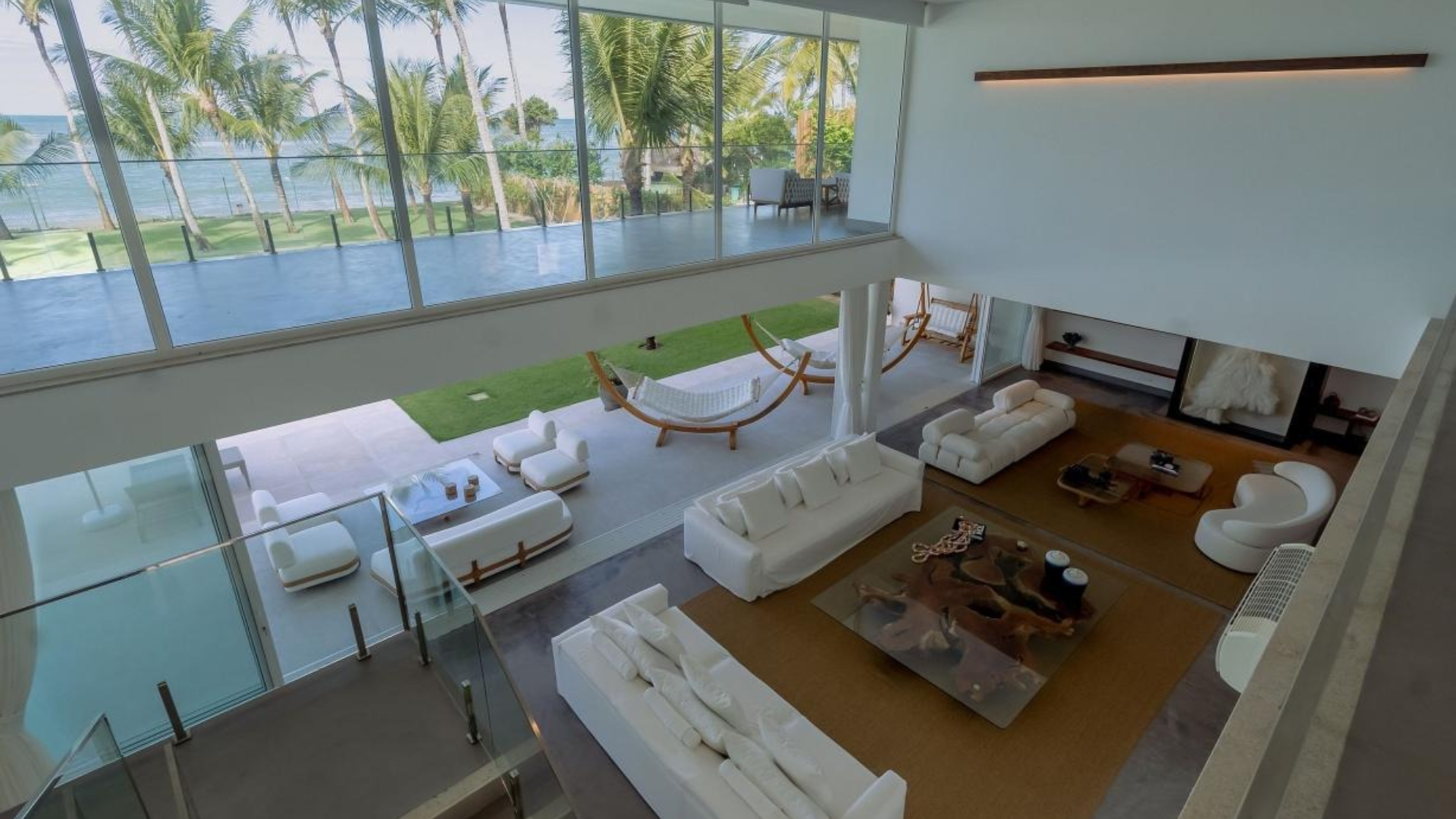
A cultural visit can also become part of a longer stay in southern Bahia. Travellers who want a premium coastal setting near Porto Seguro can consider a premium private beachfront villa in Arraial d’Ajuda. Blue Bauhaus in Arraial d’Ajuda offers a private luxury estate with direct access to Araçaipe Beach, making it a distinct option for guests seeking an exclusive beachfront experience.
For those planning time in Trancoso, Casa Areia is a beach-access villa in Trancoso, located in Altos de Trancoso. Its elevated setting, ocean views and residential atmosphere offer a different type of stay. These properties have distinct locations and experiences, so the choice depends on the setting and accommodation style that best suits the visit.
Let Bahia’s Creative Voices Shape the Journey
Novembro das Artes Negras 2026 is an opportunity to recognise the artists, communities and cultural expressions that contribute to Bahia’s identity. Its presence across multiple municipalities, including Porto Seguro, makes the initiative relevant to visitors interested in discovering more than the region’s beaches and historic landmarks.
From November 17 to 30, the programme forms part of a wider celebration of Black culture and creative expression throughout the state. Whether you attend a performance, explore an exhibition or simply learn more about the initiative’s cultural significance, the experience can add a deeper perspective to a visit to Bahia.
Follow the official programme announcements for confirmed local activities, and allow the voices and creativity of Bahia’s artists to guide a different kind of cultural discovery.
 English
 Portuguese