

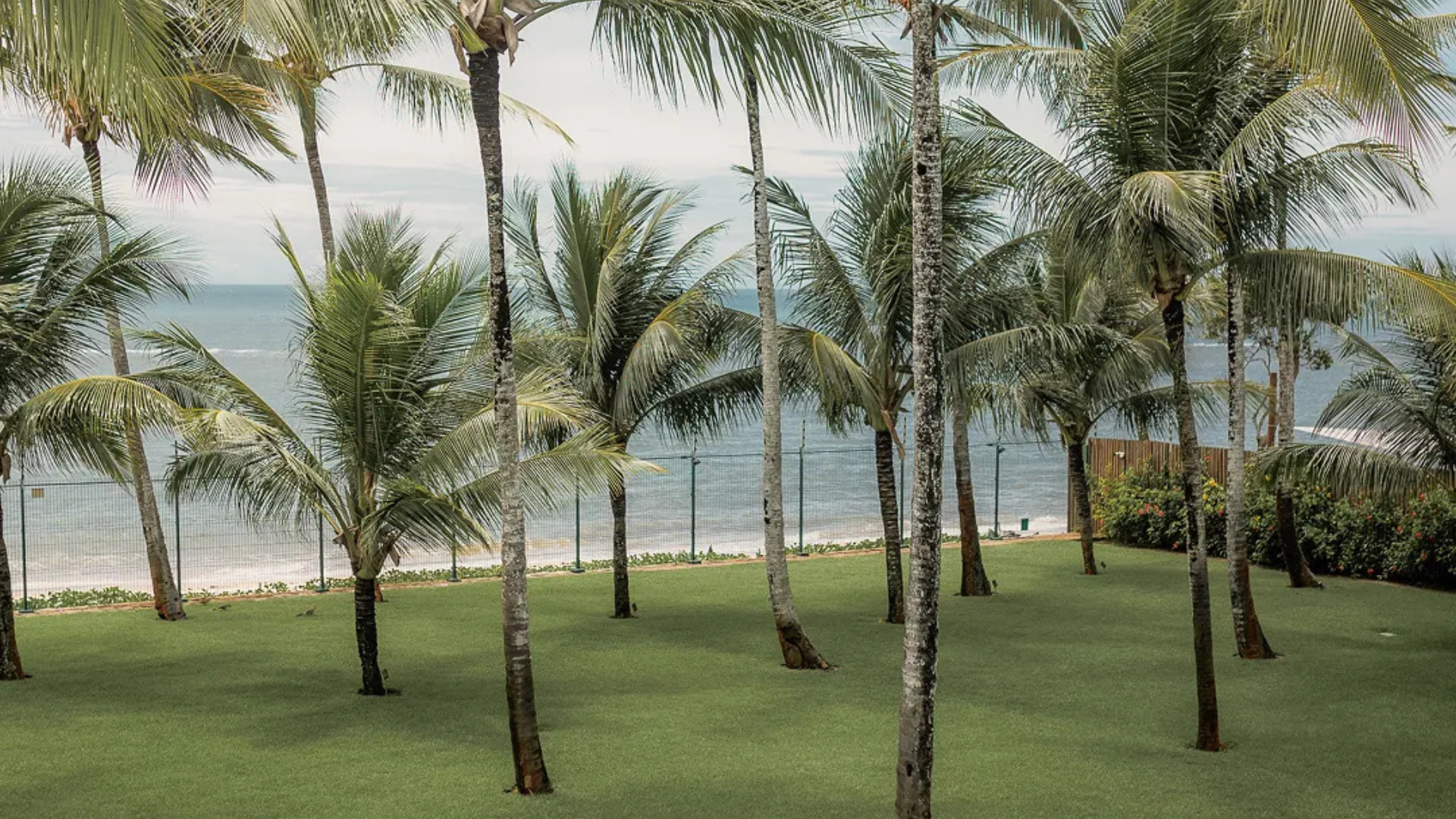
When people picture Bahia, golden beaches, turquoise waters, and endless sunshine often come to mind. While these coastal views are undoubtedly breathtaking, they tell only part of the story. Beyond the shoreline lies one of Brazil’s richest natural landscapes, where towering palms, vibrant flowering trees, dense Atlantic Forest vegetation, and coastal ecosystems create the unmistakable character that defines southern Bahia.
For travelers, these native plants do more than beautify the scenery. They influence the region’s climate, support local wildlife, provide shade on warm afternoons, and shape the tranquil atmosphere that makes every luxury escape in Bahia feel deeply connected to nature. Rather than existing separately from the landscape, thoughtfully designed villas like Blue Bauhaus embrace this natural environment, allowing guests to experience Bahia as locals have for generations.
Understanding the vegetation surrounding Arraial d’Ajuda adds a new appreciation for the destination—one that extends far beyond its beaches and ocean views.
Bahia’s Landscape Is More Than a Tropical Paradise
Southern Bahia sits within one of Brazil’s most ecologically significant regions. Much of the area forms part of the Atlantic Forest biome, known locally as the Mata Atlântica. Although this forest once covered much of Brazil’s eastern coastline, only portions remain today, making its preservation increasingly important.
The transition between rainforest, mangroves, coastal dunes, and sandy beaches creates remarkable biodiversity within a relatively small area. As visitors move between the coastline and inland paths, they notice how dramatically the scenery changes without ever leaving the region.
This natural diversity gives Bahia its distinctive identity among the many Brazil coastal towns, where lush greenery is just as memorable as the ocean itself.
Coconut Palms: The Icon of Bahia’s Coastline
Few plants symbolize Bahia as clearly as the coconut palm.
Stretching along beaches and surrounding many coastal properties, these elegant trees have become part of the region’s visual identity. Their gently swaying fronds provide welcome shade while framing spectacular ocean views that visitors immediately associate with tropical Brazil.
Beyond their beauty, coconut palms have long supported coastal communities by providing food, natural materials, and economic opportunities through local agriculture.
For guests staying at Blue Bauhaus, the sight of these palms moving with the ocean breeze becomes part of the everyday experience, creating an atmosphere that photographs alone can never fully capture.
Almond Trees Offer Welcome Coastal Shade
Scattered throughout southern Bahia, tropical almond trees (Terminalia catappa) are another familiar part of the landscape.
Their broad canopies create cool, shaded areas along walking paths, beaches, and gardens, making them popular gathering places during warmer hours of the day.
As the seasons change, their leaves gradually shift through shades of green, yellow, orange, and red before falling naturally, adding subtle bursts of color that contrast beautifully with Bahia’s evergreen surroundings.
Visitors often enjoy reading, relaxing, or simply escaping the midday sun beneath these impressive trees.
Vibrant Flowering Trees Add Color Throughout the Year
One of Bahia’s greatest natural surprises is that color isn’t limited to the coastline.
Throughout the year, native flowering trees brighten streets, gardens, and surrounding forests with striking blossoms.
Depending on the season, visitors may encounter:
- Golden trumpet trees with brilliant yellow flowers
- Purple and pink ipês creating dramatic seasonal displays
- Red-flowering coral trees attracting birds and pollinators
- Native hibiscus adding vibrant tropical color
These seasonal blooms transform familiar landscapes into entirely new experiences, rewarding travelers who return during different times of the year.
Unlike carefully designed botanical gardens, these natural displays appear throughout towns and coastal roads, making everyday walks feel unexpectedly memorable.
Coastal Vegetation Protects Bahia’s Shoreline
Many visitors overlook the importance of the low-growing vegetation found between beaches and inland areas.
Native grasses, shrubs, and dune plants perform essential ecological roles by:
- Stabilizing sand dunes
- Reducing coastal erosion
- Protecting wildlife habitats
- Filtering rainwater
- Supporting pollinating insects
Although less visually dramatic than towering palms, these resilient plants help preserve the beaches that attract visitors from around the world.
Their presence demonstrates how every part of Bahia’s ecosystem contributes to the region’s long-term environmental health.
A Landscape Designed by Nature
Unlike destinations where landscaping relies heavily on imported ornamental plants, Bahia’s natural environment already provides remarkable beauty.
Many luxury properties embrace this existing landscape rather than replacing it. Native vegetation blends seamlessly with contemporary architecture, creating outdoor spaces that feel authentic instead of artificial.
At Blue Bauhaus, this philosophy allows guests to experience a stronger connection with the surrounding environment. Rather than separating indoor comfort from nature, large open spaces, tropical gardens, and carefully preserved greenery allow the landscape itself to become part of the villa experience.
The result is a setting where architecture complements nature instead of competing with it.
Native Plants Create Homes for Local Wildlife
The lush vegetation surrounding southern Bahia does much more than enhance the scenery. It supports an incredible variety of wildlife that contributes to the region’s peaceful atmosphere.
Native trees provide shelter for colorful birds, while flowering plants attract butterflies and pollinating insects throughout the year. Small reptiles, tropical birds, and countless native species all depend on healthy coastal ecosystems to survive.
Guests who spend time outdoors—especially during the early morning or late afternoon—often notice birds moving through the tree canopy or hear their distinctive calls before seeing them. These everyday encounters create a stronger connection to Bahia’s natural environment and remind visitors that the region’s biodiversity extends well beyond the shoreline.
For many travelers, these quiet moments become some of the most memorable parts of their stay.
Why Native Landscaping Feels More Relaxing
There is a reason tropical landscapes often feel calming.
Unlike highly manicured gardens that rely on rigid symmetry, Bahia’s native vegetation grows in layered, organic patterns. Tall palms filter sunlight, flowering trees create seasonal color, and dense greenery softens the surrounding architecture.
This natural composition influences the overall atmosphere in subtle ways.
Instead of overwhelming visitors with elaborate landscaping, native plants encourage slower observation. The movement of palm leaves in the breeze, shifting shadows beneath large trees, and changing colors throughout the seasons all contribute to an environment that feels peaceful without trying to impress.
It’s a reminder that luxury is often found in simplicity and harmony with nature.
Exploring Bahia Beyond the Beach
While the coastline naturally draws attention, stepping slightly inland reveals another side of the region.
Walking trails, quiet roads, and surrounding countryside showcase an impressive variety of tropical vegetation that many visitors never expect. Exploring these areas offers a greater appreciation of the natural landscapes that have shaped local communities for generations.
Some of the best opportunities to enjoy Bahia’s plant life include:
- Scenic walks beneath mature tropical trees
- Exploring protected Atlantic Forest areas
- Visiting local artisan villages surrounded by native vegetation
- Discovering quiet coastal paths framed by palms and flowering plants
- Watching native birds in the early morning
These experiences encourage travelers to slow down and see Bahia as more than a beach destination.
The Role of Native Plants in Sustainable Tourism
Protecting native vegetation is becoming increasingly important as more travelers seek environmentally responsible destinations.
Preserving existing trees and coastal ecosystems helps reduce erosion, supports biodiversity, and maintains the natural beauty that attracts visitors in the first place. Many architects, landscape designers, and hospitality properties throughout Bahia now recognize that sustainability begins by working with the landscape rather than replacing it.
This approach benefits both the environment and the visitor experience.
Instead of creating artificial surroundings, thoughtfully designed properties allow guests to enjoy authentic tropical scenery while minimizing unnecessary environmental impact.
For travelers who appreciate nature, this creates a much richer and more meaningful connection with the destination.
Experiencing Bahia Through Every Sense
Native plants shape far more than what visitors see.
They influence the scent carried by the ocean breeze after tropical rainfall, provide natural shade that makes outdoor spaces comfortable throughout the day, and create gentle movement and sound as leaves respond to coastal winds.
These small sensory details often become lasting memories because they cannot be recreated elsewhere.
It’s this combination of greenery, fresh air, warm light, and coastal tranquility that gives Bahia its unmistakable identity. Long after returning home, many travelers remember how the destination felt just as much as how it looked.
Where Nature and Luxury Meet
A memorable luxury escape in Bahia isn’t defined only by beautiful interiors or exceptional views. It’s equally shaped by the natural surroundings that frame every experience.
Blue Bauhaus embraces this relationship by allowing Bahia’s native landscape to remain an essential part of daily life. Tropical gardens, mature palms, and carefully preserved vegetation surround the property, creating privacy while strengthening the connection between architecture and nature.
Rather than treating the landscape as decoration, the villa celebrates it as one of its greatest features. Guests can enjoy breakfast accompanied by birdsong, unwind beneath swaying palms, or simply admire how the changing light filters through native trees as the day progresses.
This seamless relationship between design and environment reflects the authentic character of southern Bahia.
Looking Beyond the Coastline
The beaches may introduce travelers to Bahia, but its native plants reveal the destination’s deeper identity.
From towering coconut palms and flowering ipês to coastal vegetation and remnants of the Atlantic Forest, every landscape tells a story about the region’s biodiversity and its connection to local life. These natural elements create the peaceful atmosphere that distinguishes Bahia from many other Brazil coastal towns, encouraging visitors to appreciate more than just the ocean.
For those staying at Blue Bauhaus, this richness becomes part of the everyday experience. Surrounded by tropical greenery and thoughtful design, guests discover that Bahia’s greatest luxury is not only its coastline—it is the remarkable harmony between nature, culture, and architecture that defines every moment spent here.
Frequently Asked Questions
What native plants are commonly found in Bahia?
Bahia is home to coconut palms, tropical almond trees, ipê trees, native hibiscus, coastal shrubs, and Atlantic Forest vegetation that thrive throughout the region.
Why are native plants important to Bahia’s environment?
Native vegetation helps prevent coastal erosion, supports wildlife, improves biodiversity, and preserves the natural beauty that makes Bahia one of Brazil’s most distinctive destinations.
Does the Atlantic Forest extend into southern Bahia?
Yes. Southern Bahia contains important remnants of Brazil’s Atlantic Forest, one of the world’s richest biodiversity hotspots, supporting thousands of native plant and animal species.
How do native plants enhance a luxury villa experience?
Native landscaping creates natural privacy, shade, cooler outdoor spaces, and a stronger connection with the surrounding environment, making the stay feel more authentic and relaxing.
Why should visitors explore beyond Bahia’s beaches?
Beyond the coastline, travelers can experience tropical forests, flowering trees, wildlife, scenic walking trails, and landscapes that showcase the region’s rich ecological diversity and cultural character.
 English
  Portuguese