

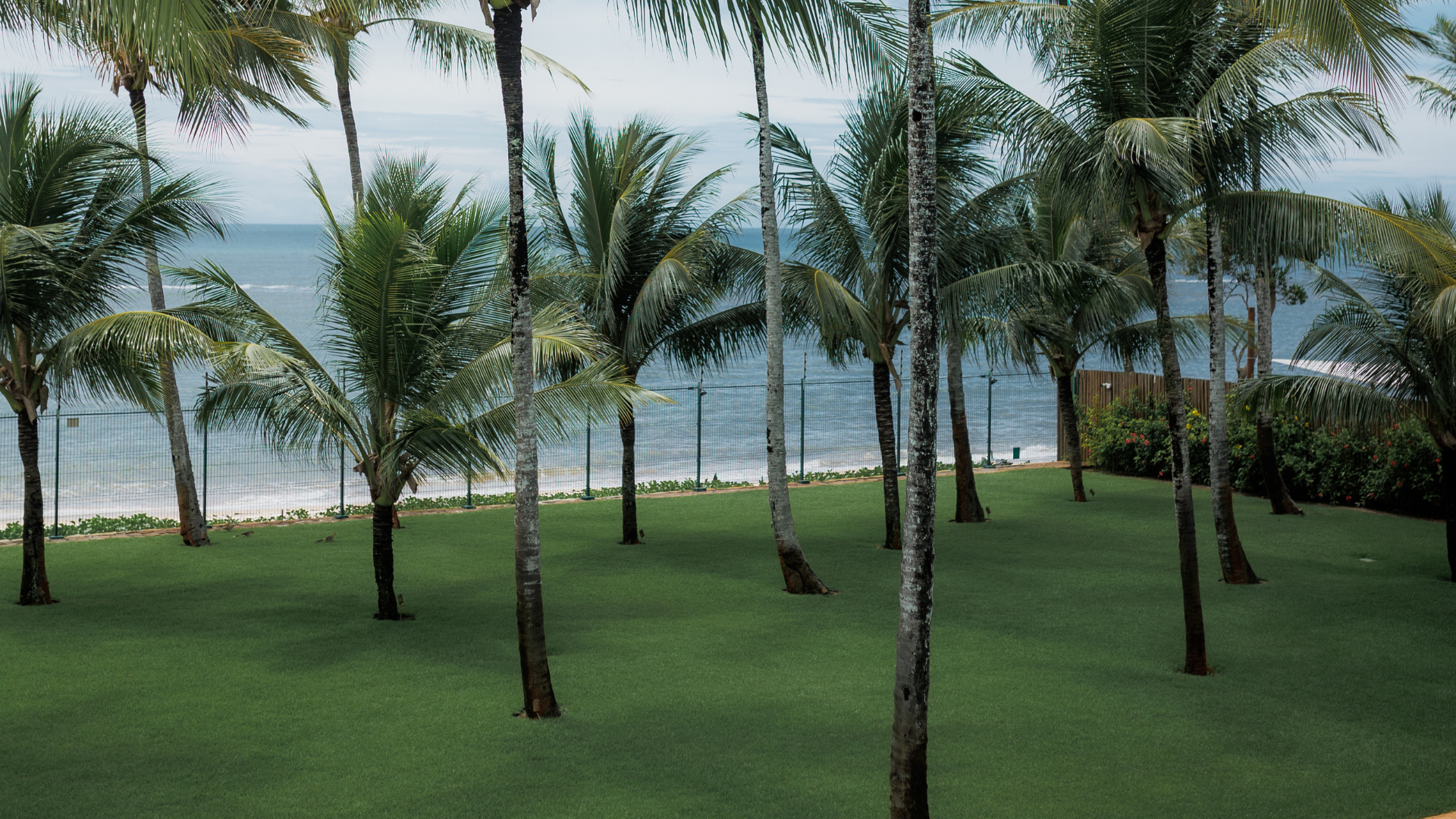
A long beachfront villa stay is not simply an extended holiday. It is a shift in operating mode.
On Araçaipe Beach in Arraial d’Ajuda, within the Porto Seguro municipality, extended stays unfold differently than short, itinerary-driven visits. The environment residential coastline, walkable beach, separation from high-density zones supports continuity rather than compression.
In a setting such as Blue Bauhaus, the distinction becomes structural rather than conceptual.
Transitioning from Guest to Resident
The first adjustment during a long stay is psychological.
Short visits prioritize efficiency: unpack minimally, schedule activities, and optimize daylight. Extended stays require the opposite. Full unpacking becomes practical. Storage space matters. Surfaces are used repeatedly rather than temporarily.
Bedrooms with adequate cabinetry reduce visual clutter. Kitchen systems become functional rather than symbolic. Outdoor seating shifts from scenic to habitual.
Within several days, the villa stops feeling like accommodation and begins functioning as a residence.
This transition is essential. Without it, extended stays retain the friction of short-term travel.
Allowing the Coastline to Set the Schedule
Beachfront positioning alters time perception.
In Araçaipe, early light reaches the terrace before the beach becomes active. Morning walks occur in relative quiet. The tide cycle becomes relevant. Weather patterns replace calendar prompts.
Midday heat redirects activity toward shaded areas or interior rooms. Afternoon wind may change ocean texture. Sunset establishes a natural closing rhythm for the day.
When the villa opens directly toward the sea, these environmental cues become visible from common areas. Guests do not need to check conditions; they observe them.
Over time, daily structure aligns with light and temperature rather than appointments.
Structuring Shared and Independent Time
Long stays intensify the importance of spatial balance.
Even cohesive groups require separation. Ensuite bedrooms function as acoustic buffers. Secondary terraces provide retreat zones. Open-plan living areas allow gathering without compression.
The value lies in optionality. One person reads indoors. Another works at a table near the terrace. Others move between pool and sand.
Because circulation paths are intuitive and transitions between indoor and outdoor areas are gradual, movement does not disrupt others.
This layered planning prevents the fatigue that often accompanies extended group travel.
The gallery provides visual context for how these zones interconnect without overlap.
Integrating Services Gradually
In shorter stays, services often feel event-based. In longer stays, they function as background systems.
Housekeeping preserves order without resetting the space. Kitchen support or chef arrangements, when used, shift from novelty to routine. Provisioning becomes strategic rather than reactive.
Concierge coordination typically evolves as well initial orientation gives way to occasional recommendations or selective arrangements rather than daily scheduling.
This integration works best when services adapt to the established rhythm of the household rather than defining it. Operational details are generally outlined in the FAQ and policies sections to support planning.
Engaging the Surrounding Area Over Time
Extended stays change how destinations are experienced.
Arraial d’Ajuda’s historic center, restaurants, and small shops are better explored gradually than intensively. A favorite café may be revisited. A coastal walk repeated at different times of day. Markets observed across the week rather than consumed in one visit.
Araçaipe’s position between Porto Seguro’s ferry crossing and the town center makes partial outings practical. Engagement does not require full-day commitment.
This measured interaction prevents destination fatigue and allows familiarity to develop.
Further geographic context can be found in the location guide.
Designing Wellness Without Formal Structure
In long beachfront stays, wellness rarely requires programming.
The presence of a private terrace encourages morning stretching. Ocean proximity promotes daily swimming or walking. Shaded garden areas invite reading or quiet reflection.
Without resort timetables or shared facilities, practices emerge organically. The environment supports repetition the same corner for coffee, the same stretch of sand for walking.
Consistency, rather than novelty, produces restoration.
Adapting Space as Needs Shift
Extended occupancy reveals the flexibility of a villa.
Dining tables alternate between formal meals and workspace. Secondary bedrooms convert into temporary offices. Outdoor areas shift from social gatherings to solitary use depending on the day.
This adaptability is especially relevant for hybrid stays combining leisure with remote work or study. The architecture must support reconfiguration without physical modification.
At Blue Bauhaus, circulation clarity and spatial separation allow these transitions without disrupting the overall equilibrium.
Letting Repetition Replace Urgency
Short trips emphasize completion: sights seen, restaurants visited, excursions booked.
Long stays shift emphasis toward recurrence. The same beach walk at different tides. The same meal prepared with local ingredients. The same sunset observed from the terrace.
Over time, repetition becomes the experience.
This is where beachfront villas differ most from hotels. Without turnover pressure or external scheduling, days expand rather than compress.
Why Extended Beachfront Living Feels Structurally Different
The defining characteristic of a long villa stay is stability.
Privacy remains constant. Access to the beach remains immediate. The surrounding residential environment remains predictable. There are no fluctuating guest populations or shared infrastructures to navigate.
In southern Bahia, this continuity allows travelers to experience the coastline gradually rather than transactional.
The result is not spectacle. It is alignment between architecture, environment, and daily routine.
A long beachfront villa stay succeeds when the space absorbs time rather than compresses it.
 English
  Portuguese