

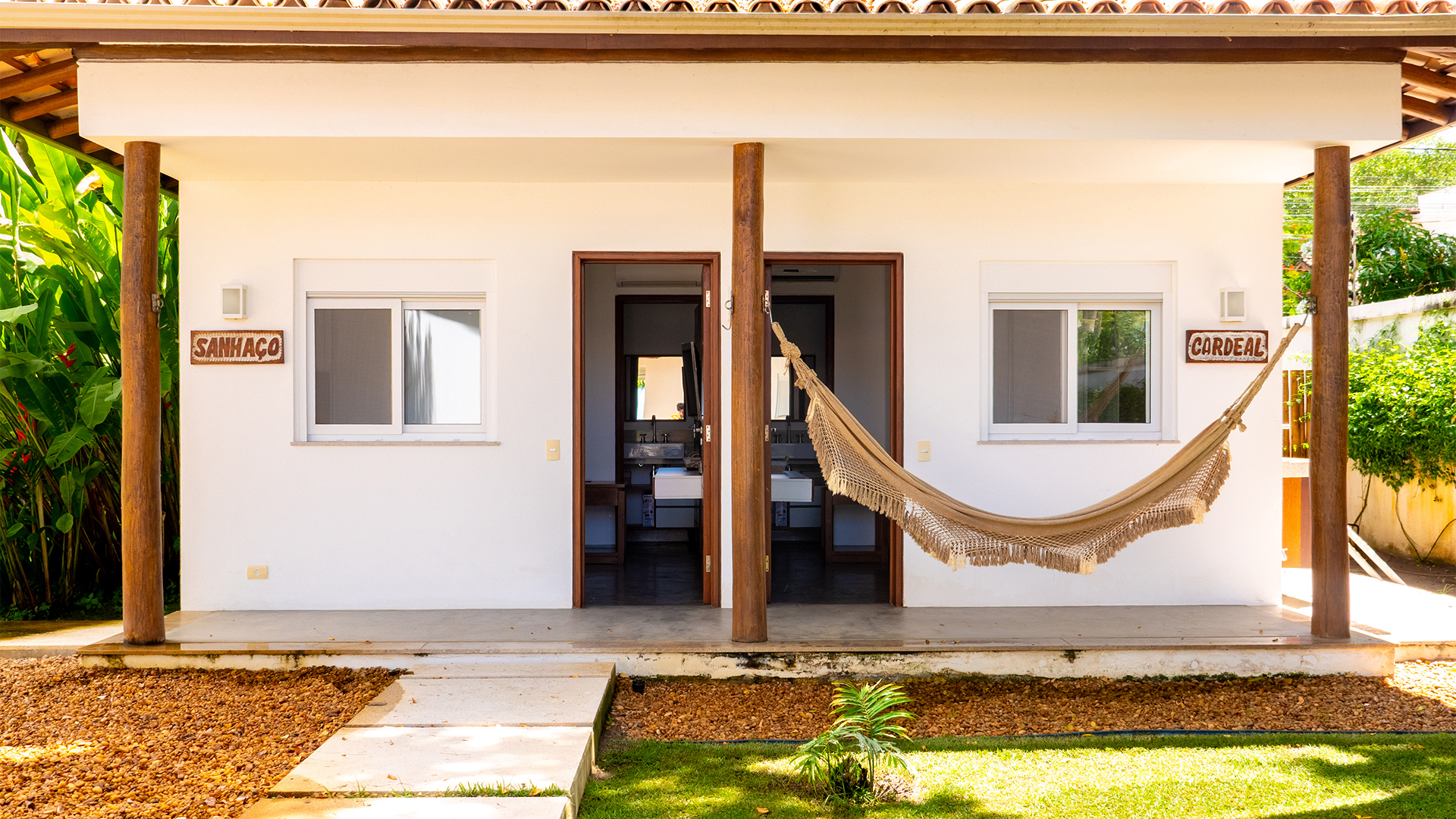

There are places that feel designed, and then there are places that feel composed. Blue Bauhaus belongs to the latter a sanctuary where architecture, art, and nature exist in quiet equilibrium.
Perched above the coastline of Arraial d’Ajuda, this coastal retreat reimagines modern living through the principles of Bauhaus minimalism form distilled to essence, beauty revealed through restraint. Here, luxury isn’t added; it’s uncovered.
A Dialogue Between Land and Line
Blue Bauhaus begins with a question: how do you create structure without interrupting serenity?
The answer lies in its geometry. Angular white volumes rise gently from the earth, softened by light, air, and horizon. The architecture does not compete with the landscape, it listens to it. Each line feels deliberate, yet fluid; each space, open yet intimate.
It’s a study in balance between architecture and atmosphere, built form and natural rhythm.
The Bauhaus Ethos by the Sea
The inspiration is clear yet reinterpreted. The Bauhaus movement founded in early 20th-century Germany championed simplicity, utility, and unity between art and craftsmanship. Blue Bauhaus translates this ethos into a tropical vocabulary, replacing concrete urbanism with coastal calm.
Where Walter Gropius sought precision, Blue Bauhaus found poetry. Where steel and glass once defined modernism, here, the elements are sunlight, shadow, and sea breeze.
Every villa becomes a meditation on proportion. Horizontal planes mirror the horizon; open corridors channel the wind; wide terraces dissolve boundaries between indoors and out. The effect is less architectural dominance and more architectural stillness, an invitation to feel rather than simply see.
The Minimalist Soul: Less, but Deeper
Minimalism at Blue Bauhaus is not about subtraction, it’s about essence.
The design strips away ornaments to reveal authenticity. Walls are rendered in soft white lime, textured by hand to catch the Brazilian light. Flooring shifts between cool stone and warm reclaimed wood, grounding modern form in organic tactility.
Furniture is sculptural yet restrained: low-slung sofas, woven textures, ceramics shaped by local artisans. Each piece feels chosen, not placed serving both function and feeling.
But what truly defines space is air. The architecture breathes. Large openings frame the sea like living artwork, allowing natural ventilation to replace artificial control. The scent of salt, the murmur of waves, the movement of light all become integral elements of design.
Light as Architecture
Few materials are as powerful as light. At Blue Bauhaus, it’s treated like a living dimension, the invisible structure that shapes mood and meaning.
Morning sunlight spills softly across white walls, warming cool surfaces into gold. At midday, the interiors glow with a diffused clarity, filtered through linen drapery that moves like water. By dusk, shadows lengthen, revealing the architecture’s quiet drama planes, voids, and reflections in conversation with the sea.
Each hour transforms the space. It’s as if time itself were part of the design language, a reminder that architecture, when open to nature, never truly stands still.
Material Honesty: Nature as the Blueprint
Blue Bauhaus embodies a design philosophy rooted in truth to materials. Nothing is concealed, nothing is artificial.
The palette is restrained but sensual lime plaster, bleached oak, rattan, linen, raw concrete softened by ocean air. These materials, left in their natural state, weather beautifully over time, deepening the villa’s connection to its surroundings.
Even the landscaping follows this honesty. Native flora palms, sea lavender, and dune grass are woven seamlessly into the architecture, blurring the threshold between built and grown.
Sustainability here is not decorative; it’s intuitive. Solar orientation maximizes natural light and minimizes heat. Ventilation flows through open courtyards. The architecture doesn’t resist the climate it belongs to.
A Symphony of Space and Silence
In an age of excess, the true luxury of Blue Bauhaus lies in its silence.
The villas are designed as sanctuaries spaces where visual noise fades and sensory experience heightens. Walking through them feels almost musical: rhythm in repetition, harmony in proportion, pause in stillness.
Corridors frame views like brushstrokes. Water elements reflect the sky. The repetition of form creates calm, the kind that quiets the mind and expands the breath.
This silence is intentional. It allows what matters most texture, temperature, and light to rise to awareness. Its architecture is mindfulness.
Interiors as Emotion
Inside Blue Bauhaus, the interiors act as emotional architecture. They don’t merely house life, they enhance it.
The living spaces open toward the sea, dissolving the line between shelter and horizon. Bedrooms are intentionally sparse, prioritizing comfort through tactility, crisp linen, cool stone, the soft hum of ceiling fans instead of air-conditioning’s static hum.
Every gesture invites presence: the sound of a door sliding open, the feel of terracotta under bare feet, the way sunset turns white walls into rose gold.
It’s a language of simplicity, spoken fluently through design.
The Art of Integration
Art is never separate at Blue Bauhaus; it’s embedded in the experience.
Each villa curates pieces from Brazilian artists and ceramicists, chosen not for spectacle but for sincerity. Abstract works echo the geometry of the structure; hand-glazed vessels pick up the tones of the earth.
Even negative space becomes part of the composition allowing art, architecture, and nature to converse without hierarchy. It’s Bauhaus’s original ideal, the union of disciplines reborn by the sea.
Modernism with Warmth
While Blue Bauhaus draws from modernism’s structural clarity, it softens it with warmth and soul.
Where traditional modernist design can sometimes feel distant, Blue Bauhaus feels human. Its minimalism is lived-in, its geometry softened by sun and salt. The result is a paradox that feels both modern and timeless, both designed and natural.
It’s modernism reimagined for the tropics, one that breathes, rests, and listens.
A Philosophy of Place
Ultimately, what sets Blue Bauhaus apart isn’t its form, but its philosophy.
It redefines coastal architecture not as escape, but as return, a return to proportion, presence, and purpose. It reminds us that beauty doesn’t demand attention; it invites awareness.
Standing within its quiet corridors, framed by the sea and sky, you feel something rare in contemporary architecture humility. A sense that the building knows its place within the world, and celebrates it without excess.
The Minimalist Soul of the Coast
To step inside Blue Bauhaus is to experience minimalism not as aesthetic reduction, but as emotional expansion. Every empty space is intentionally an opportunity to feel more, not less.
Here, architecture doesn’t impose. It whispers.
It tells stories in light and shadow, in the coolness of stone, in the salt carried through the air.
It teaches a lesson only the sea can echo: that simplicity, when deeply understood, becomes the highest form of sophistication.
 English
  Portuguese